

Investigating Indian SMBs to identify critical business use cases in need of digital interventions to enhance overall efficiency.
Client : IPSOSxGoogle
Industry : Tech Design Research
My Role : User Researcher
Duration : Jan 2024 - Feb 2024
Team : +3 Designers
Imagine
You’re running a small business where you and you’re team juggle multiple roles, handling clients, managing operations, following upon payments, and trying to grow all at once. Every day is a race with scattered emails, WhatsApp messages and excel sheets, keeping things barely on track. Multiple tools promise to ease this burden, offering automations, smarter workflows and better decision making. But can it truly integrate into the way small businesses operate, or does it add another layer of complexity?
Why this research was conducted?
The rise of Gen Ai is reshaping businesses through automation, content creation, and decision-making support.
Indian SMBs are increasingly adopting digital tools to boost productivity and streamline operations, yet challenges like data security, usability, and personalised integration persist.
The study explores how SMBs perceive and adopt various tools, their use cases for better tool integration, their pain points & expectations - offering insights to better serve their business needs.
Research Goals
Within the 4 BUs, CRM users sit across a spectrum from Management to Contributor. For Management to do their job efficiently, regardless of the BU, there’s a heavy reliance on Contributors to use the CRM effectively.
frog Design-IN was briefed to particularly focus on the ‘Banking’ BU of the Platform for the first phase.
The strategy team (frog-US) handed over the research artefacts and onboarded us(frog-IN) to work closely with them and Barclays Design-IN teams.
Activities Conducted
01
Recruiting Participants
02
Moderating Interviews
03
Analysing Datapoints
04
Generating themes and insights
05
Direction for Conceptualisation
06
Documentation (Final Report)
Participant’s sample size
17 participants → ranging from utilities, manufacturing, technology, healthcare, finance, automotive, and retail.
Understanding SMB Lifecycle
Before diving into the research, it was essential for us to understand the overall journey of SMB owners through the different stages.

Themes we explored
01 - Current Workflow
Identifying potential customers through online platforms, referrals, and outreach efforts.
We spoke to SMB owners across multiple domains, ranging from manufacturing to finance, healthcare, utilities, to understand more about..
02 - Tool Integration
Getting a better understanding of the use cases where the business heavily relies on tools.
03 - Roadblocks
Getting an insight into the systemic gaps that might hamper their daily functioning.
04 - Trust and Security
Understanding potential concerns with respect to the tools they or their customers use.
Initial Observations
Through the initial set of conversations we had with the business owners, certain patterns started emerging. These patterns gave a more funnelled direction to the research.
The primary hurdle lies in the insufficient time allocated for lead generation. Furthermore, in some instances, the owner bears the sole responsibility for pitching to new clients or manages a small team of 2-3 individuals for this task.
The task of awaiting client responses and sending out reminders poses a significant challenge.
Despite the availability of tools like Excel and Sheets, the manual effort involved in creating and updating plans becomes challenging, particularly when managing multiple engagements concurrently.
In some instances, there is no digital intervention, and tasks are manually recorded on paper or a blackboard. This method is susceptible to errors and can potentially cause delays in the overall process.
Finalising briefs, translating customer requirements, and conveying them to the delivery teams, whether in-house or outsourced, can be cumbersome. This process leads to idea gaps or information loss, resulting in multiple back-and-forth between the involved parties.
Failure to monitor deliveries and provide timely updates to customers poses a challenge.
Manual efforts are required for sending tracking updates, introducing inefficiencies. Ensuring continuous communication during the deployment or installation of a solution at the client's end is crucial.
Monitoring various accounts and tracking client payments is a cumbersome task.
Where things started to break
From our initial set of interviews, certain patterns started emerging. One of the ways we chose to distil the data was by plotting the current journey of the owners to find areas of concern that directly impact their day to day functioning as those would be the root causes that we will have to focus more on.
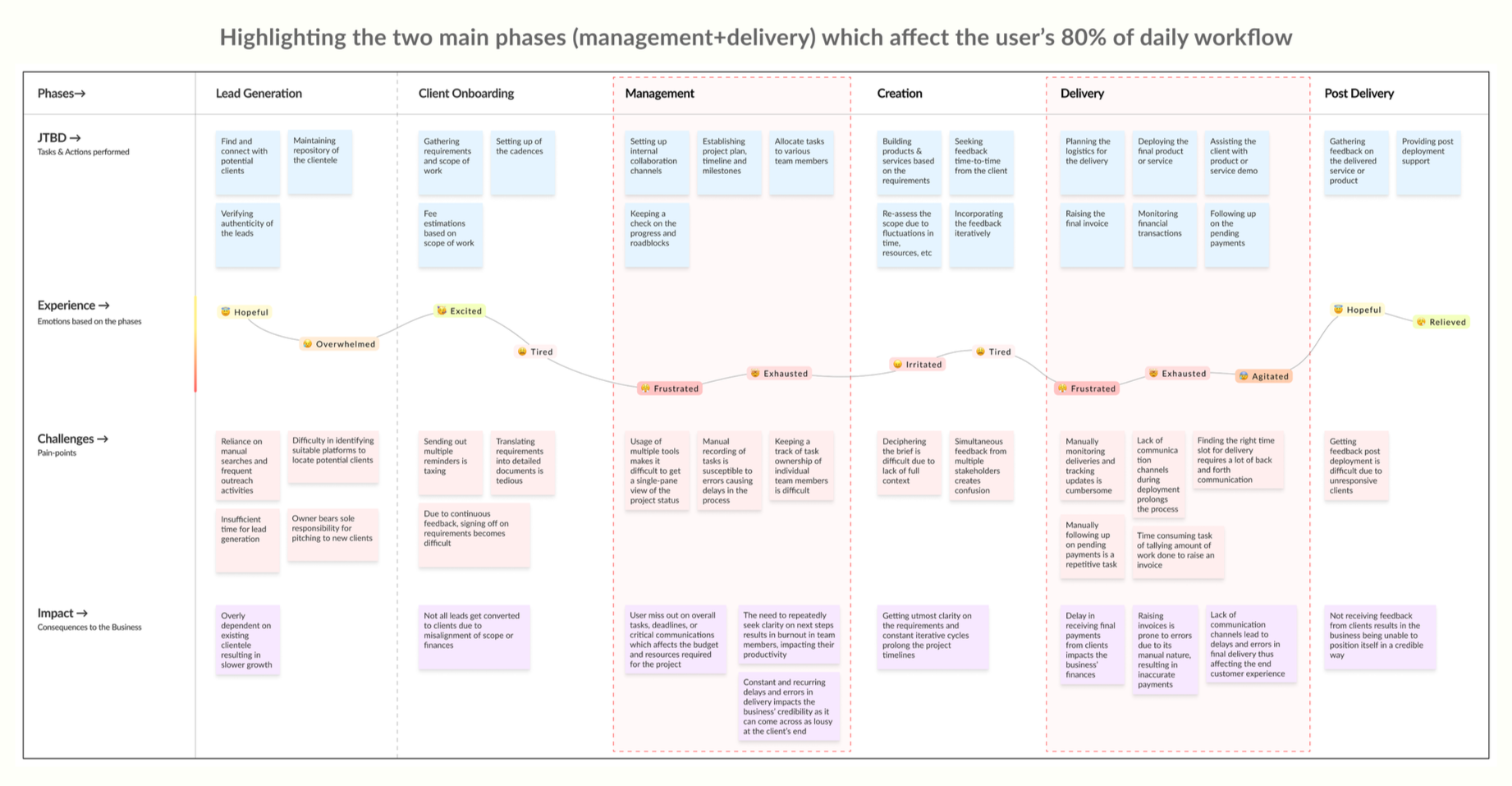
Because these findings pertain mostly to the Management and Delivery stages of the journey we decided to probe more on them for the remaining interviews.
Pivoting to a nicher section of the journey as participants were facing significant issues in these stages (Management and Delivery)
What the research confirmed..
After understanding the Management and Delivery stages in-depth, we were able to derive some concrete insights that would pave the way for future concepts that can be built for SMBs.
01
58% of teams hesitate to adopt Ai based task automation, citing lack of integration with existing workflows . and fear of losing control over task delegation.
02
The capabilities of currently available cloud-based productivity tools limits in addressing the intricate project management needs of over 80% of users prompting them to turn to external tools, thus resulting in a fragmented workflow and increased efforts dedicated to tracking tasks.
03
Approximately 95% of business owners opt for WhatsApp as their primary tool for document sharing and unofficial calls, citing its widespread acceptance and ease of use.
04
Only 18% of businesses have Ai driven logistics tracking, with some relying on third party partners that lack Ai integration. However, most businesses spend additional efforts to track this delivery data manually, resulting in inefficiencies in the workflow.
05
29% of businesses hesitate to use Ai or other digital tools for financial tracking, citing security concerns and the need for customised payment terms, resulting in additional manual efforts to monitor all the payments.
Pathways for SMBs to adopt in future
Based on the insights derived, we came up with multiple pathways that SMBs can adopt to make their day-to-day functionings smoother and sustainable.
01
Ai-integrated CRM and order management tools for SMBs to increase customer retention rates through personalised interactions and real-time updates.
02
Seamless integration of certain WhatsApp Business functionalities into digital workspaces to simplify adding, processing, and accessing intricate data thus avoiding loss of context.
03
Implementing automation for daily task tracking and work updates to enhance overall workflow efficiency.
Ai-powered tools that extract valuable insights from project tracking data, contributing towards informed decision-making, workflow optimisation, and strategic planning for effective business execution.
04
Ai-powered invoicing and tracking systems that reduce late payments and improve cashflow predictability for SMBs.
Designed to monitor all accounts and payment milestones for each project, the tool ensures timely invoicing and provides clients with ample time to complete the payment process.
Translating research into tangible directions...
Building further on these pathways, we drafted a concept model for easier implementation of the opportunity areas, thus laying the groundwork of translating the research into tangible outcomes.
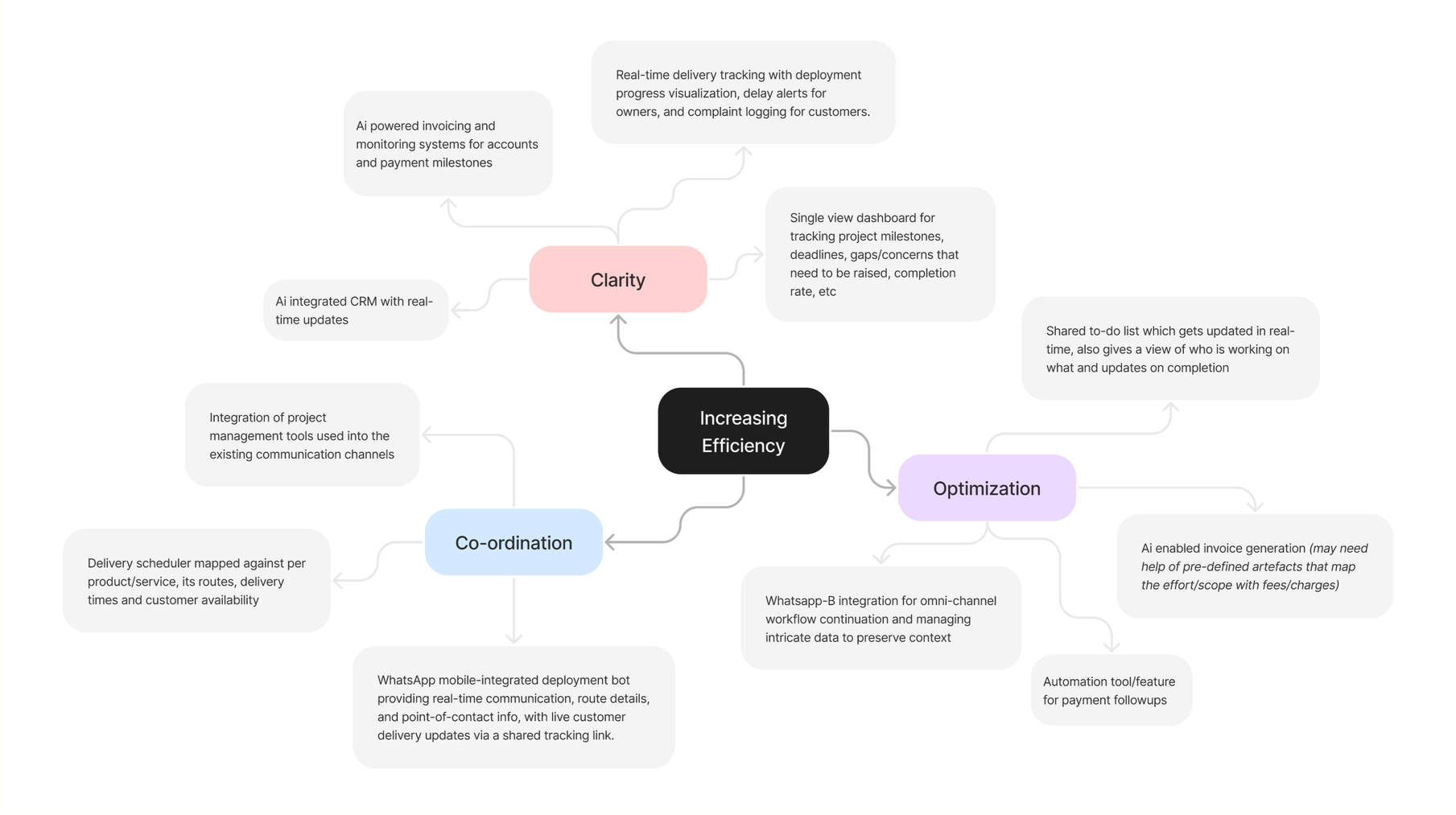
These theme and feature combinations can be used by design teams in different ways across the SMB lifecycle to mitigate challenges around Management and Delivery phases, thus enhancing efficiency and business outcomes for them.
More of my Work…
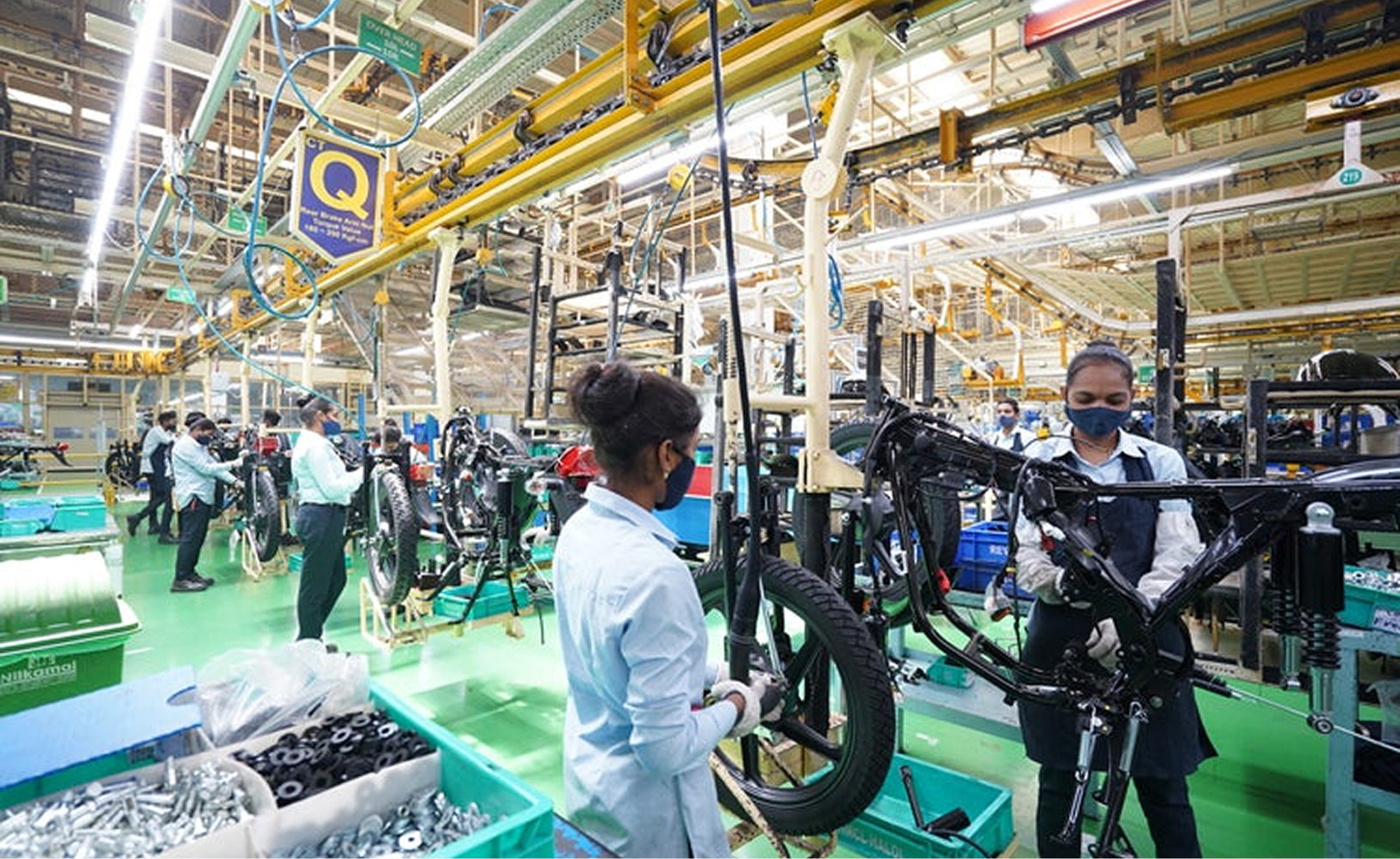
Digital Factory Transformation
Driving manufacturing with Service Design methodologies for intelligent diagnostics and optimized maintenance.
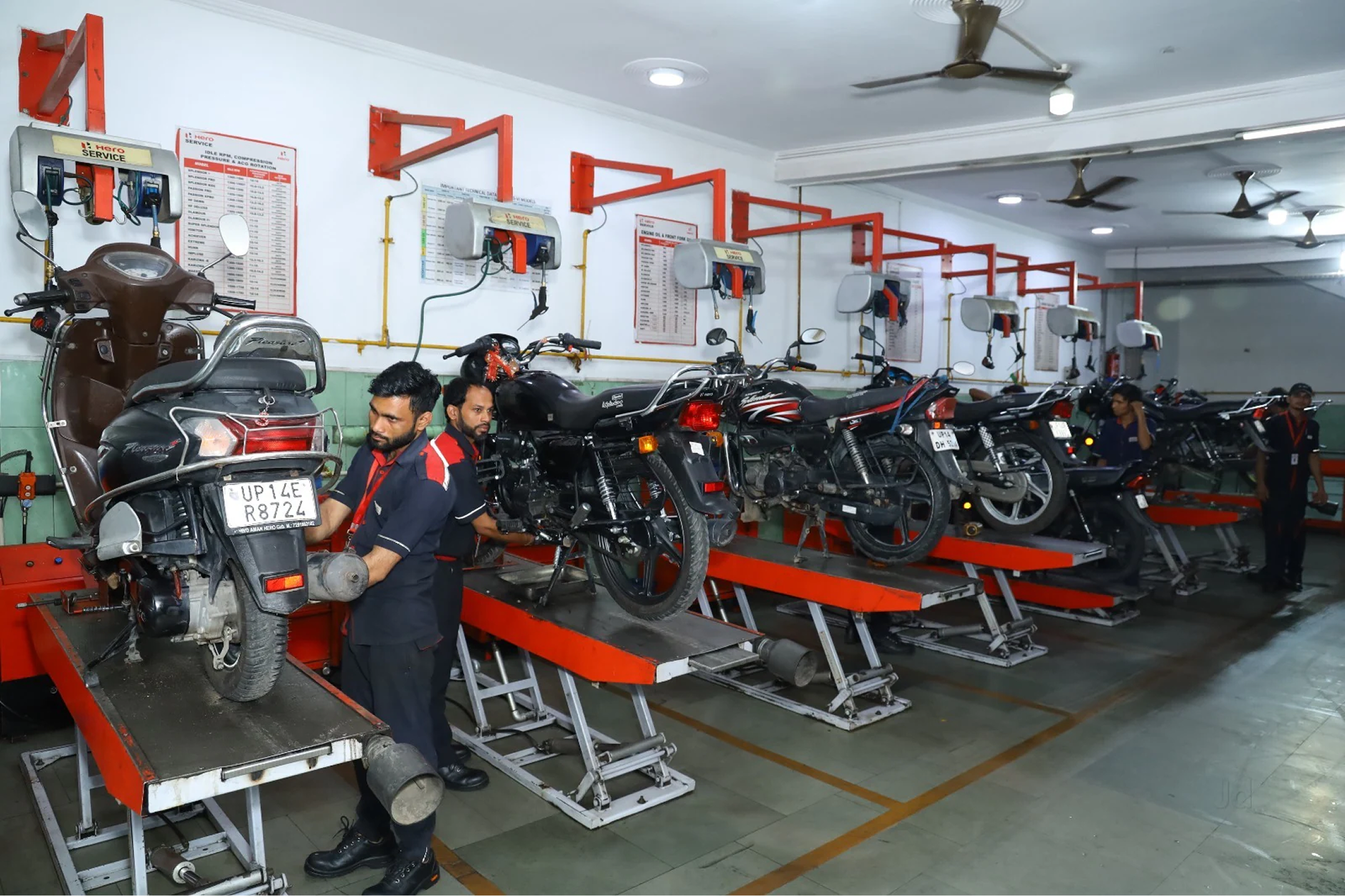
Vehicle Service Floor Management
Optimizing Automobile Service station operations to Boost Efficiency, Accuracy, and Customer Engagement