
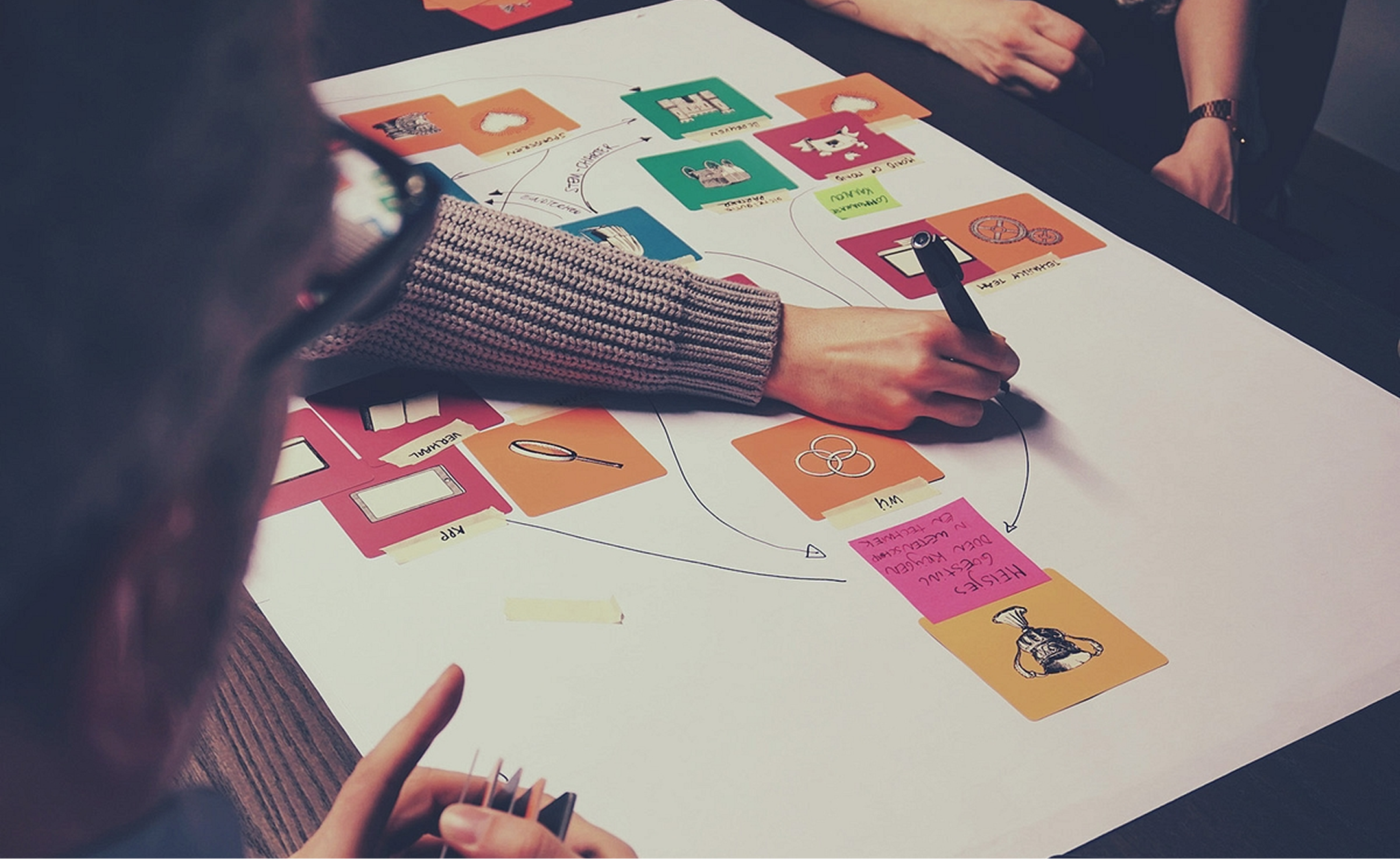
Building capability that enables organisations transform, with Intentional & Flexible Service Design interventions.
Client : frog India
Industry : Design Services
My Role : Led the creation of the service design framework for frog.
Duration : Jun 2025 - Oct 2025
Team : +4 Designers
Introduction
frog design is a global Experience design studio. They have worked with many global brands especially in the domains of UX, Interaction, Industrial, and Brand and Strategy design. We (India studio) noticed the importance and business drive created by service design interventions and how other frog studios across the world were investing in specialised service design practises. Hence we, as a team of service designers, felt the need to create a structured approach for designing services for India, in the ‘frog’ way.
Objective
Our objective revolved around 3 key pointers:-
Establish service design as one of the core capabilities within frog IN’s design services.
Build a service design framework for regional market which is Intentional, Flexible, & Scalable.
Up-skill in-house teams with service design practises and way-of-working.
Impact
// Fast adoption of the key elements of the framework in the curation of proposals which converted into projects.
// Increased familiarity of need for Service Design interventions to drive business within the studios thus increased use of the toolkit.
01 - What is it? - The Overview
Service Design capability refers to an organisation’s ability to systematically comprehend, build, and deliver strategic design resolutions that empower positive transformations for the customers - by understanding user needs, mapping complex systems, and designing coordinated journeys & services that deliver meaningful experiences across touch-points.
At our organisation, regionally, service design is not yet embedded as a practice. Projects were often delivered through fragmented processes, with limited alignment between research insights, design decisions, and implementation teams.
Moreover, businesses in India aren’t aware about the fact that their business/organisational problems could also be catered with a service design intervention. Collectively, it is still looked at as a fancy update of UX design by the decision makers. Change delivered by business or technology alone fails due to human factors.
But, Design is objectively valuable…
The objective case for design creating tangible value for organisations is strong. In fact, research from design authorities like the Design Management Institute shows:
“Design-driven companies outperform the S&P 500 by 228%” - Good Design Drives Shareholder Value, Jeneanne Rae, DMI 2015
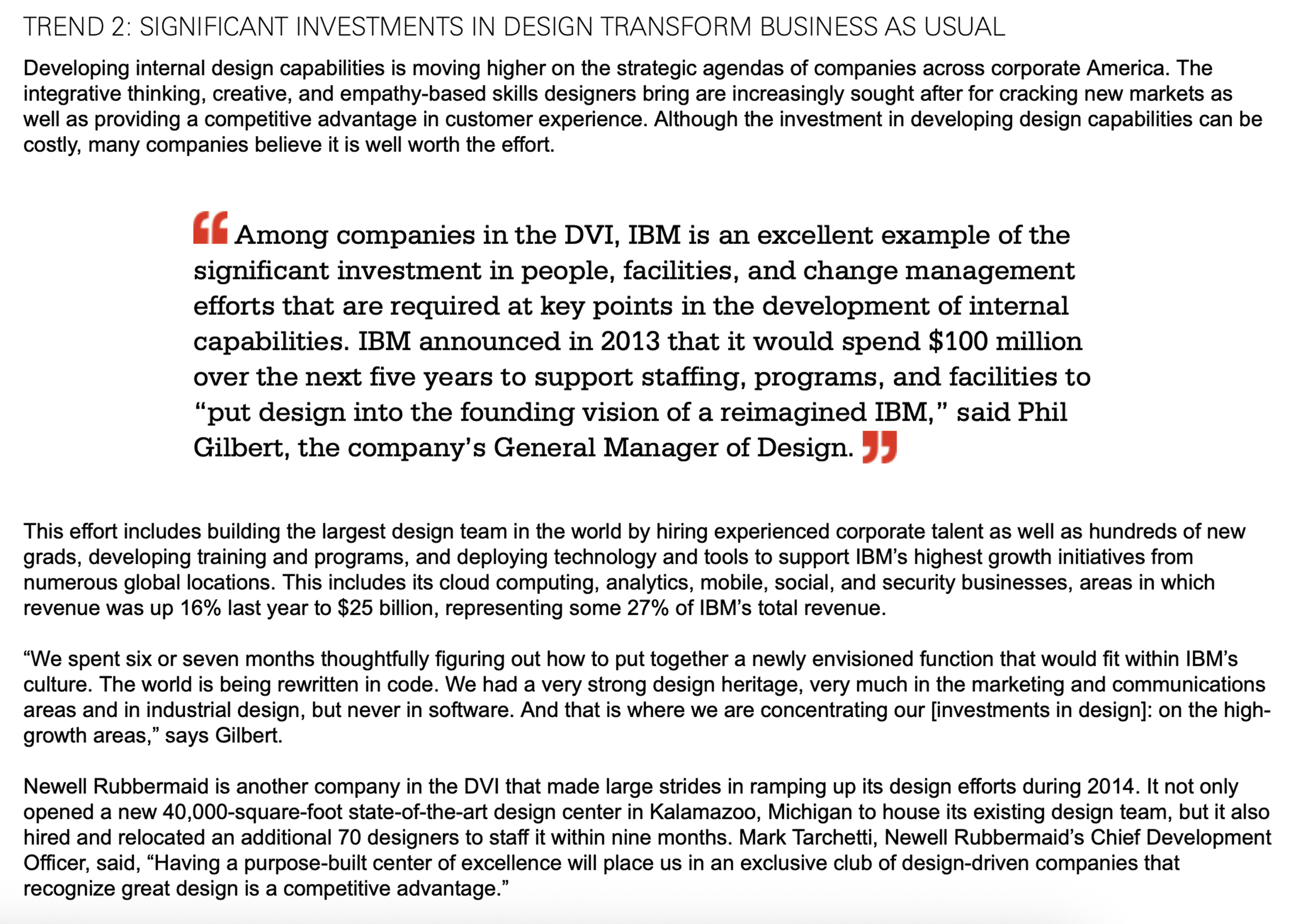
Even traditional management consultancies like McKinsey have confirmed design’s impact:
“Top-quartile MDI (McKinsey Design Index) scorers increased their revenues and total returns to shareholders (TRS) substantially faster than their industry counterparts did over a five-year period - 32 percentage points higher revenue growth and 56 percentage points higher TRS growth for the period as a whole.”
- McKinsey Quarterly, Business Value of Design, October 2018
The business case is clear. But as we all know, proving value on paper doesn’t guarantee success in the real world. Hence in order to highlight the potential of how service and strategic design intervention can influence a business, and to primarily equip partners in our organisation with a framework impactful enough to carry forward that intervention - we arrived at a decision to build an in-house capability that aims for three goals…
Establishing Service Design
Establish Service design as one of the core capabilities within frog IN’s design services.
SD framework for regional market
Build a Service Design framework for regional markets which is Intentional, Flexible, and Scalable.
Up-skilling in-house teams
Up-skill in-house teams with Service Design practises and way-of-working.
02 - Why the need? - The Rationale
As organizations scale their digital products and services, they often invest heavily in technology and interface design, yet struggle to deliver coherent end-to-end experiences. Teams work in silos, insights remain fragmented, and solutions focus on individual touchpoints rather than the broader service ecosystem.
Within our organization, similar patterns were emerging. While user research and design practices existed, there was no structured approach to understand how different actors, systems, and processes interacted to shape the overall service experience.
Challenges
As the organization expanded its digital platforms and services, teams faced increasing complexity.
01
Teams worked in silos across research, strategy, design, and operations.
02
Projects focused on interfaces rather than end-to-end services, limiting the system to translating research insights into digital execution rather than holistic strategies.
03
There was no shared framework for designing services - as most of the workflow was scattered within multiple teams.
The organization could design products, but lacked the systems-thinking, structures, and methods needed to design complex service ecosystems.
India’s rapidly evolving digital economy is creating increasingly complex service environments. Businesses must now orchestrate interactions across multiple channels, stakeholders, and operational layers.
In such contexts, traditional product or UX design approaches alone are insufficient. Service design introduces a systemic perspective, enabling organizations to:
Understand end-to-end journeys rather than isolated interactions
Align customer experience with operational processes
Identify opportunities for service innovation across the ecosystem
Create shared understanding across multidisciplinary teams
The goal was therefore not only to deliver better services, but to embed service design thinking within the organization itself.
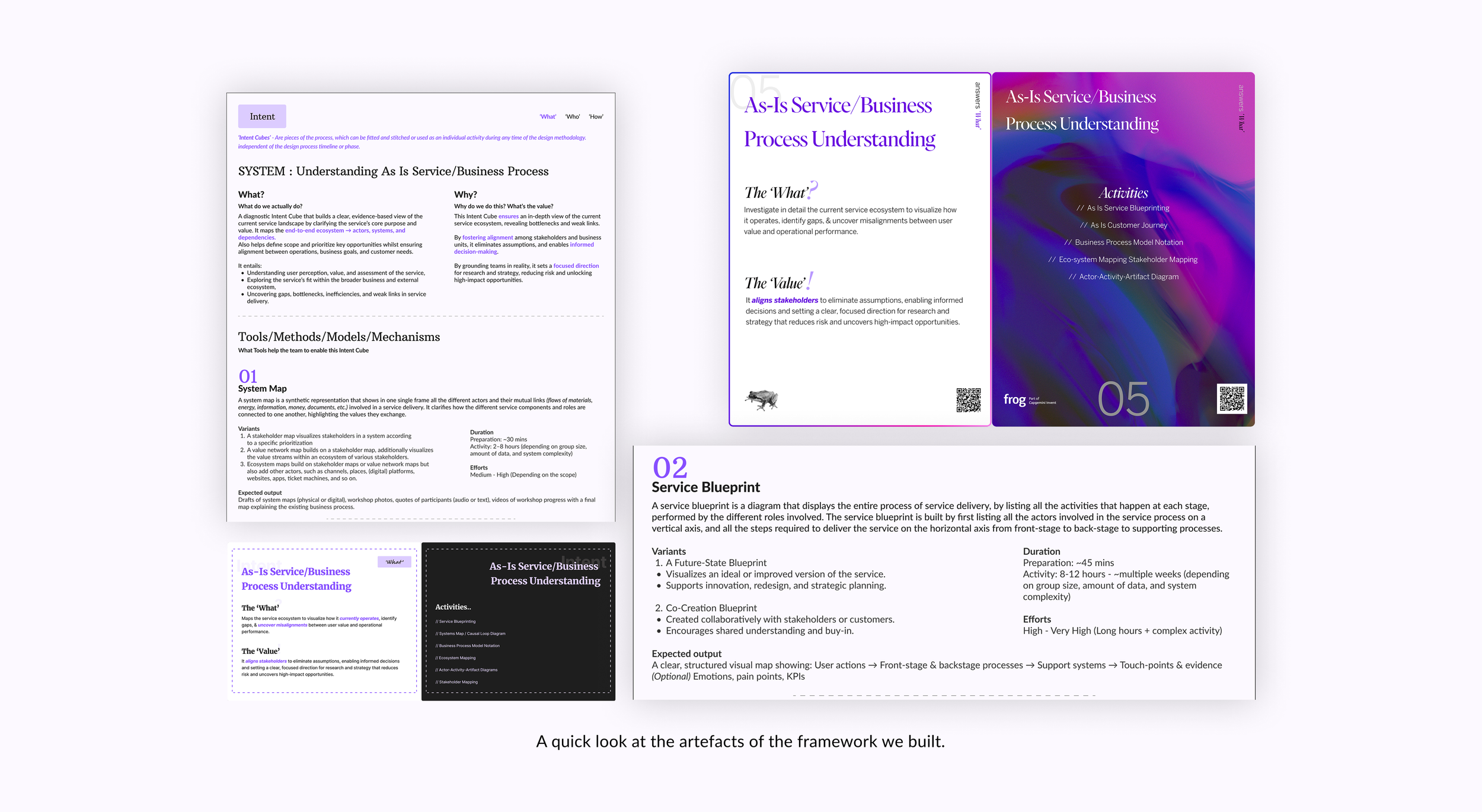
03 - What & How we built? - The Process
We developed a service design capability framework that could be applied across engagements and teams. The initiative focused on creating both mindsets and methods.
The Framework
A structured process guiding teams from research insights to service implementation.
The Practise
Tools such as ecosystem maps, stakeholder maps, & service blueprints that help visualize complex service relationships.
The Toolkit
Reusable & shared templates, frameworks, & facilitation formats that teams could adopt independently.
Journey Led
Shifting the focus from feature-based development to end-to-end journey experience design.
Collaboration
A structured process guiding teams from research insights to service implementation.
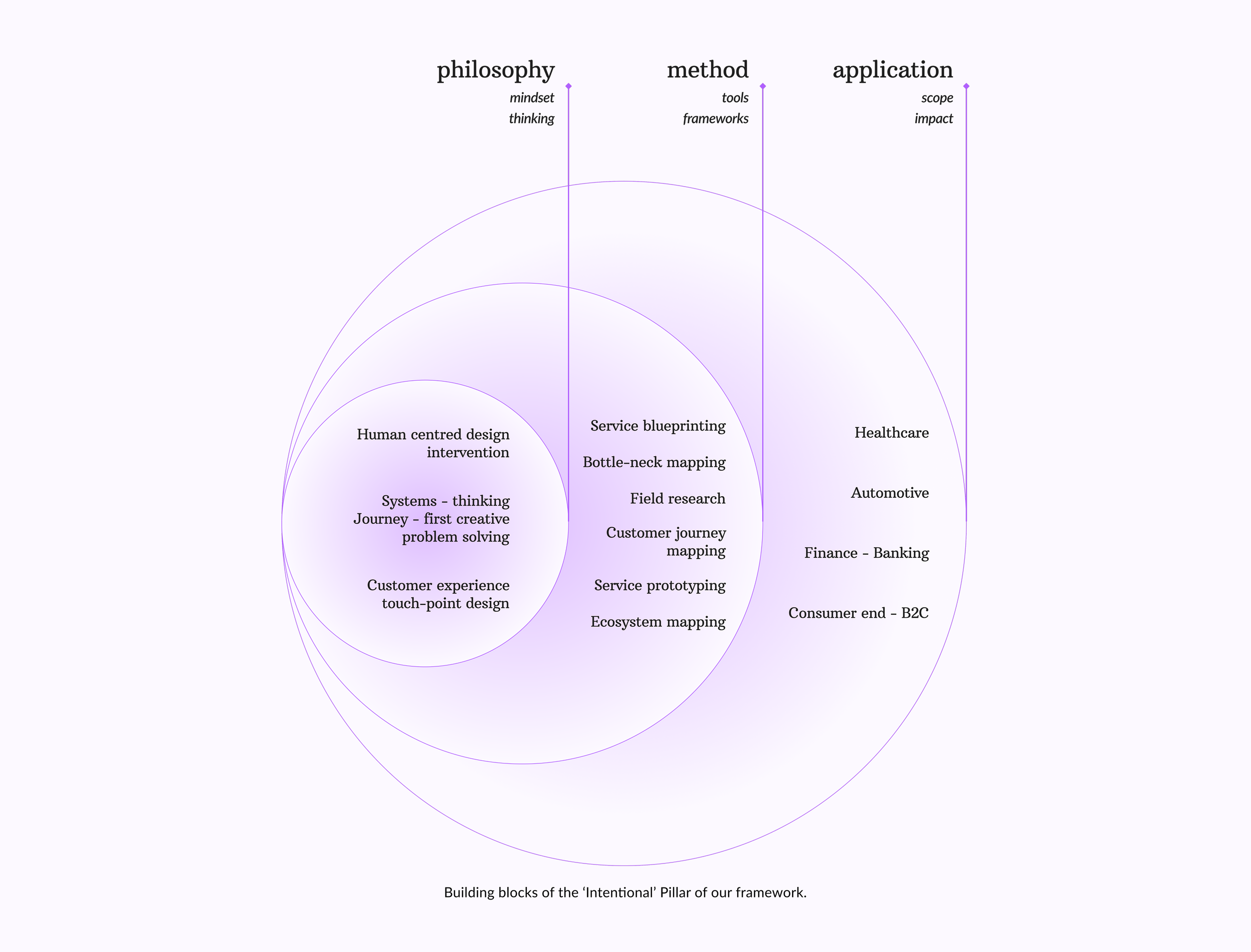
A. Intentional - Our Core Philosophy for the framework | Novelty & Founding pillar.
What does intentional/Purposeful actually mean?
When we say our process needs to be something with purpose or an intention, we mean, whatever we do in the process, it has to have a good enough rationale or philosophy of thought behind it. Hence, it has to have a Purpose or right Intention of action.
Why must a process have a purpose?
TLDR - For the right direction and vision of the solution.
When we examined how other design studios and organizations formalize their Service Design processes, we identified one key observation; Most of them only highlighted the importance of Service design tools that could be used, albeit them being an integral part of the process. However, using tools without a clear rationale can lead the process in a directionless manner. We felt it lacked purpose and only highlighted ‘How to do it’ through tools but did not focus on ‘Why to do it’ in a specific manner. Hence, we felt the need to fill this gap.
Progress in action
Our core philosophy entailed the blend of Design mindset and Right Activities → right customer centric service design thinking and use of optimal tools or methods.
Our approach began with understanding what truly drives the use of a service design tool; is it the brief, client expectations, the design leader’s perspective, or constraints? We concluded that it is the objective. And every objective stems from a conscious intention. To address this gap and clearly communicate purpose, we restructured the linear Service Design process into defined pieces. These pieces acted as the intention of every phase or sub-phase of the SD process.
We call it the ‘Intent Cubes’.
These cubes translate what we are doing and why we are doing it - the ‘Intent’.
Intent Cubes
Focusing more on the fundamental ‘what&why’ of the JTBD in the process - what we are doing and why we are doing it. These ‘whats&whys‘ are termed as the ‘Intent Cubes’, which is basically the purpose. This purpose is then blended with the optimal activities (tools and methods) to enable its effective execution.
Therefore, it reflects and matches our aim to fill the gap of what we are trying to solve and then the activities needed to solve that → right SD thinking (mindset) + utilisation of optimal set of tools (execution)
Intent Cube = A segment representing piece of a larger holistic SD process which can be mixed & matched, fitted, grouped, tailored, or be used as an individual entity during any given moment of the SD methodology, independent of the timeline.
B. Flexible - Ability to tailor and customise as per project needs.
Why Flexibility?
As the natural characteristic of the ‘Intent Cubes’ portrayed that it can be used in a tailored way, that shed light on it being ‘Flexible/Modular’ → Our next pillar of this framework.
If something that is being built can be broken and re-fitted, it NEEDS to be flexible or else it negates the idea of ‘Intent Cubes’. Hence, ‘Flexibility’ came out as our 2nd pillar for crafting this framework.
How we arrived at it?
Not every problem comes with a brief that demands an end-to-end SD process intervention. Some may also demand only a small segment of the process.
Eg → Research or service prototyping - as clients don’t just come needing for end-to-end interventions. Hence the need arose for a flexible framework that can be mixed and matched or tailored through non-linear use of the process, to achieve a certain needed deliverable.
In Action
Not every deliverable is supposed to be an end solution, but all deliverables can be accompanied with and treated like, a solution; as in service design, the solution could also just be a small strategy - hence we are treating deliverables same as solutions (not end solution)
Example
A D2C coffee roasters company selling only through quick commerce, wanting to expand in the retail cafe space, may need to know key problems in their offline payment journey. They may not need an end-to-end service blueprint as a solution or even a complete re-designed payment journey for their offline cafe stores.
Hence, here, ‘Flexibility’ of the framework can shine through using the optimal ‘Intent Cubes‘ needed for that research.
C. Scalable - Ability to sub-structure, grow, and evolve.
Why Scalability?
Scalability acting as our 3rd pillar for the framework, going hand in hand with the 2nd pillar of Flexibility. We envisioned, a framework that is adaptable and not confined to limited flexibility. Flexibility and Scalability pave way for a more customised, specific needs accommodating structures/processes.
How we arrived at it?
Scalability which goes seamlessly hand in hand with Flexibility as flexible means twisting something without breaking it.
Therefore, the framework needed to be scalable, such that, new ‘Intent Cubes’ could get added based on future landscapes and innovations (like Ai interventions) or existing intents can be restructured without damaging the core morale and inception or the idea of that intent ; or sub-structuring and dividing intents into sub-intents for smaller briefs/goals/needs.
D. Intent Cubes → Intent Cards
Why Intent Cards?
‘Intent Cubes’ function like detailed one-or two-page guides that explain why a designer should undertake a particular activity and how to approach it. They make a strong case for well-documented processes. However, in day-to-day practice, designers working amidst the chaos of whiteboards, sticky notes, and FigJam boards are unlikely to constantly refer to lengthy documents. Because the Intent Cube format is not inherently portable or handy, it risks low adoption in fast-paced design workflows.
Hence, to bridge this latent need, we condensed these Cubes (documents) in handy portable Cards, we call them ‘Intent Cards’
The Intent Card is a streamlined version of the Intent Cube. It distills the most essential information into a crisp, succinct, and portable format that is easy for designers to use in everyday practice.
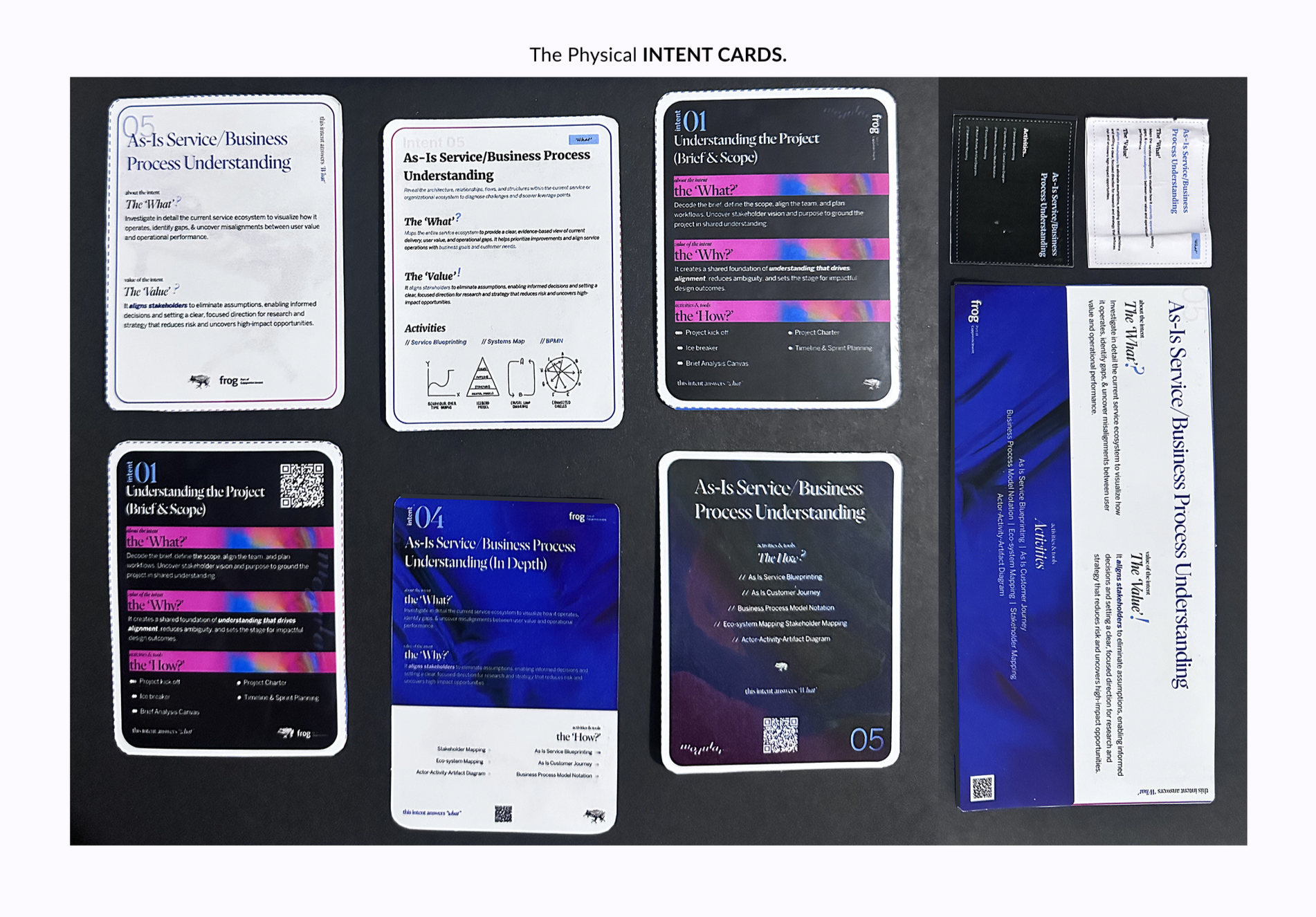
All Intent Cards from Intent 01 - Intent 12
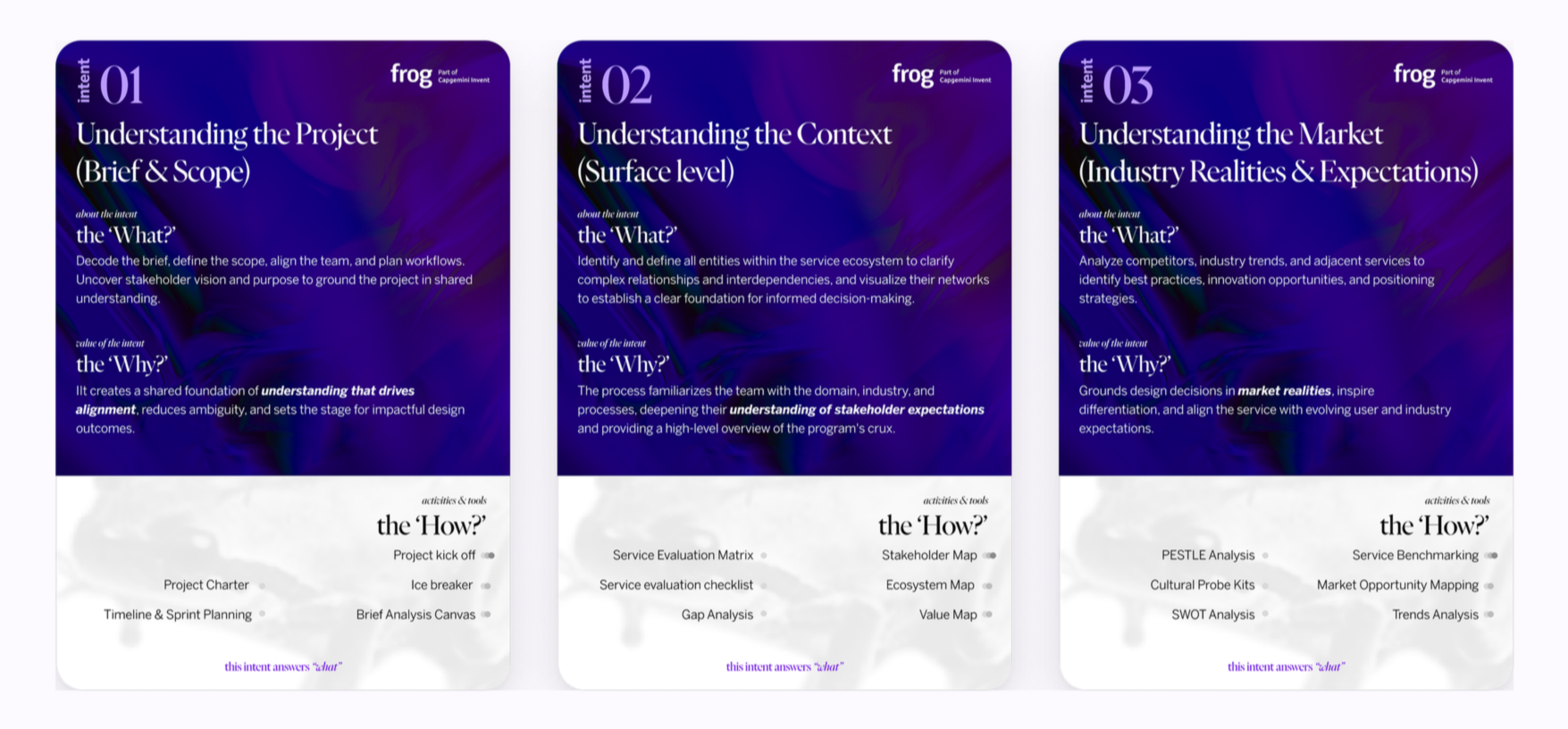
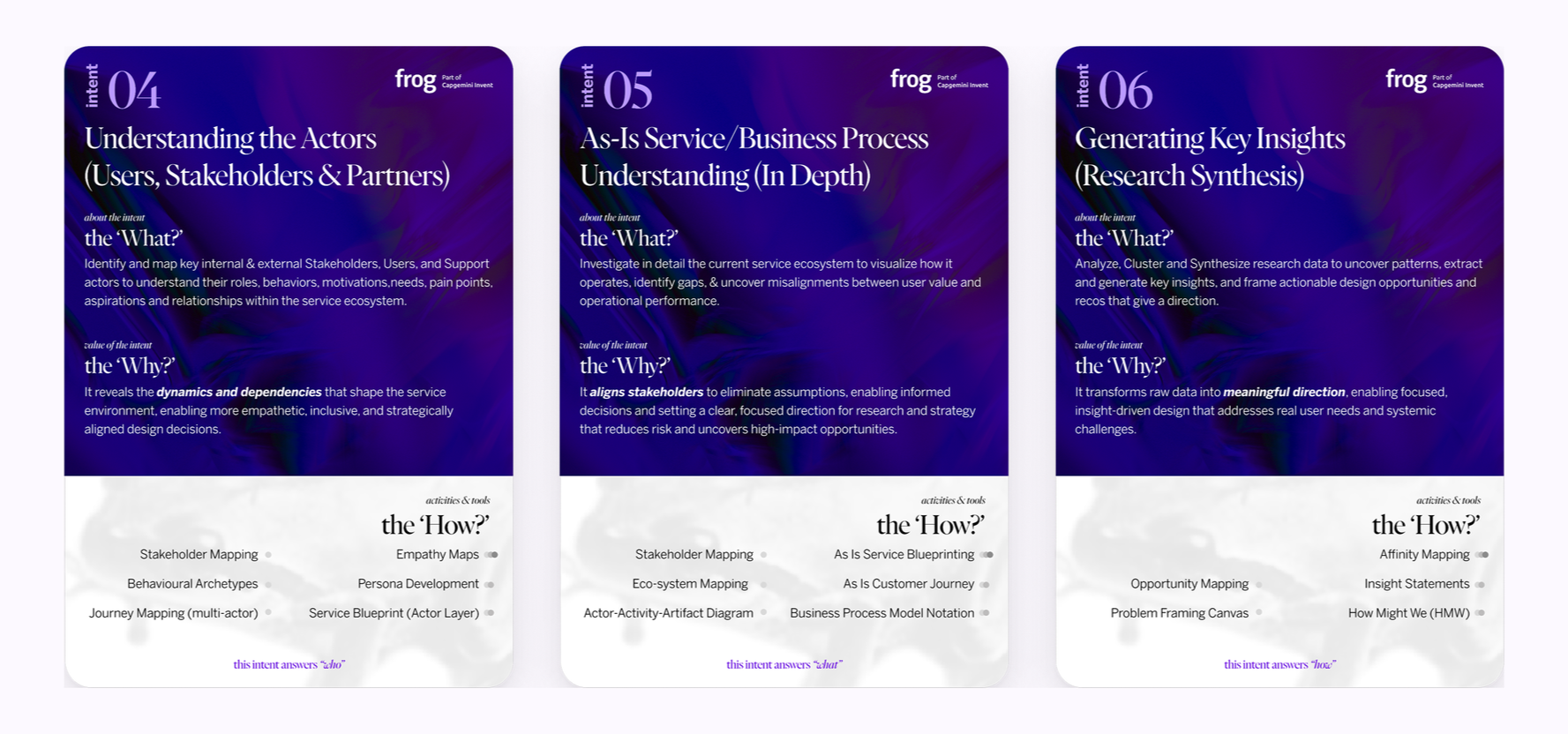
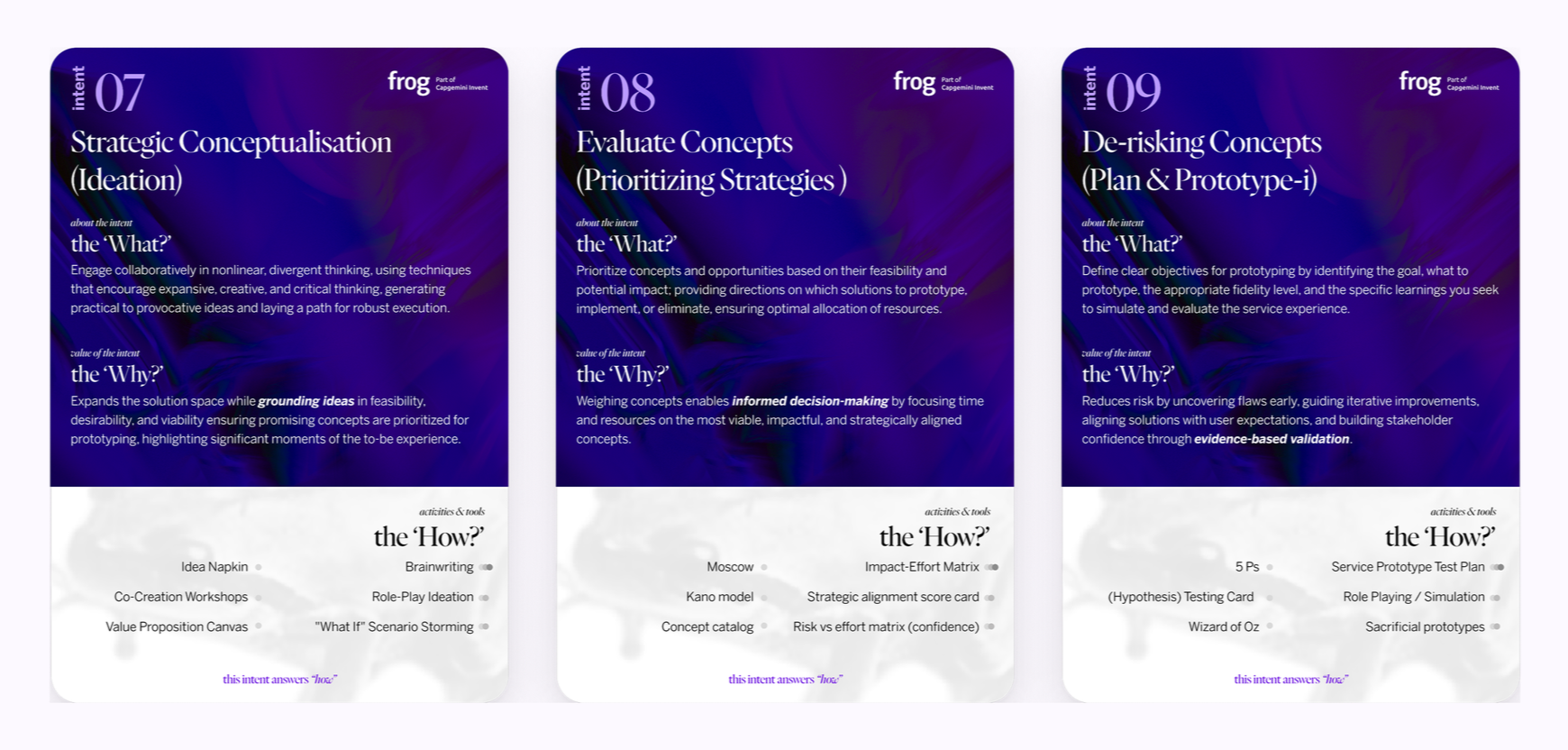
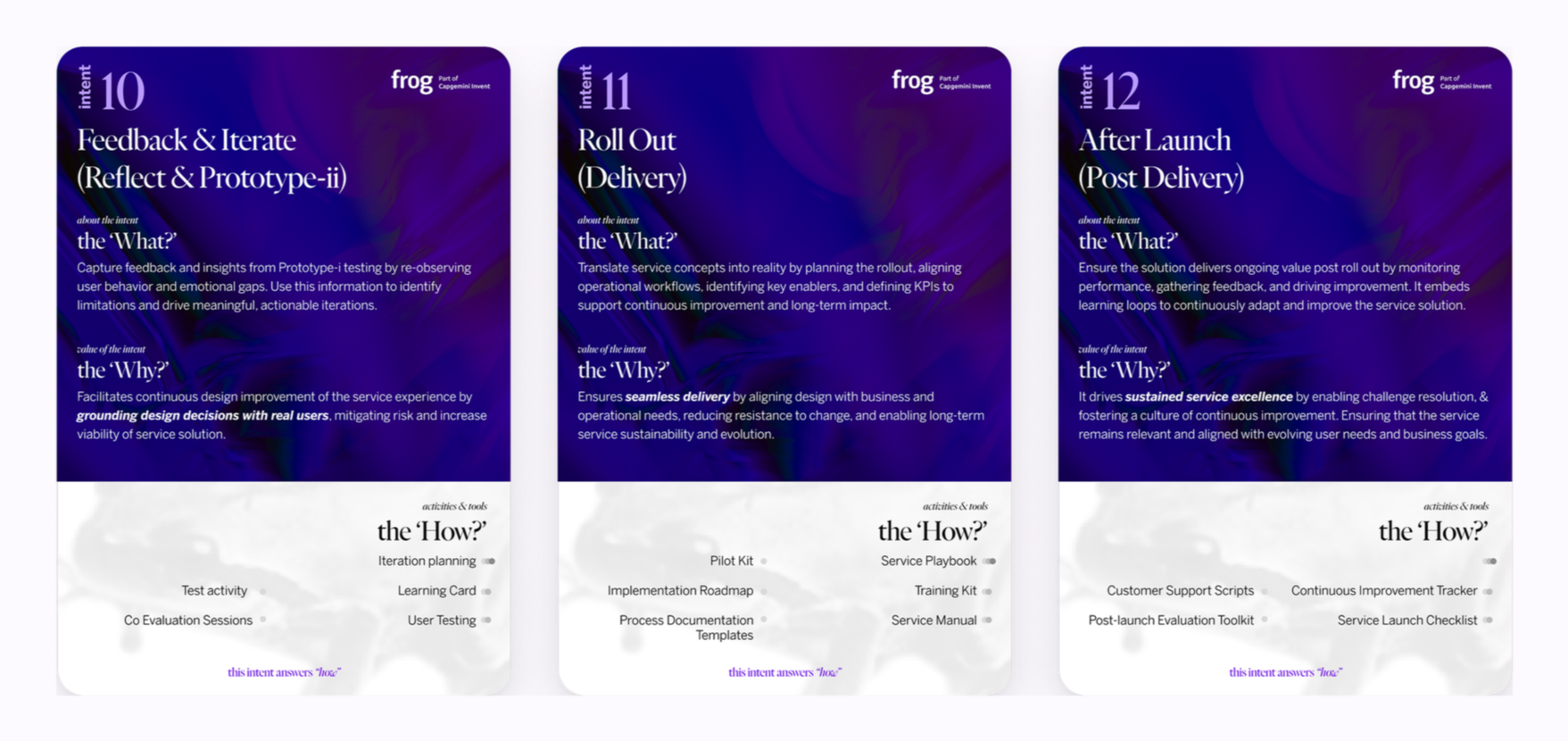
To make it more appealing, we also tried different variations of those cards and printed them to let the team get a hang of it and use it like they were meant to.
04 - Using the Framework - The Application
Although the Framework was still in the final phase of iterations, some teams were fortunate enough to try the framework on design proposals.
Before
Siloed teams
Feature-led design
Research disconnected from strategy
After
Journey-led service and systems thinking
Cross-team collaboration
System-level innovation
Our end goal with this practice was to bring teams together and enable them to work more holistically across the organization.
Eg 1 - KFC Proposal
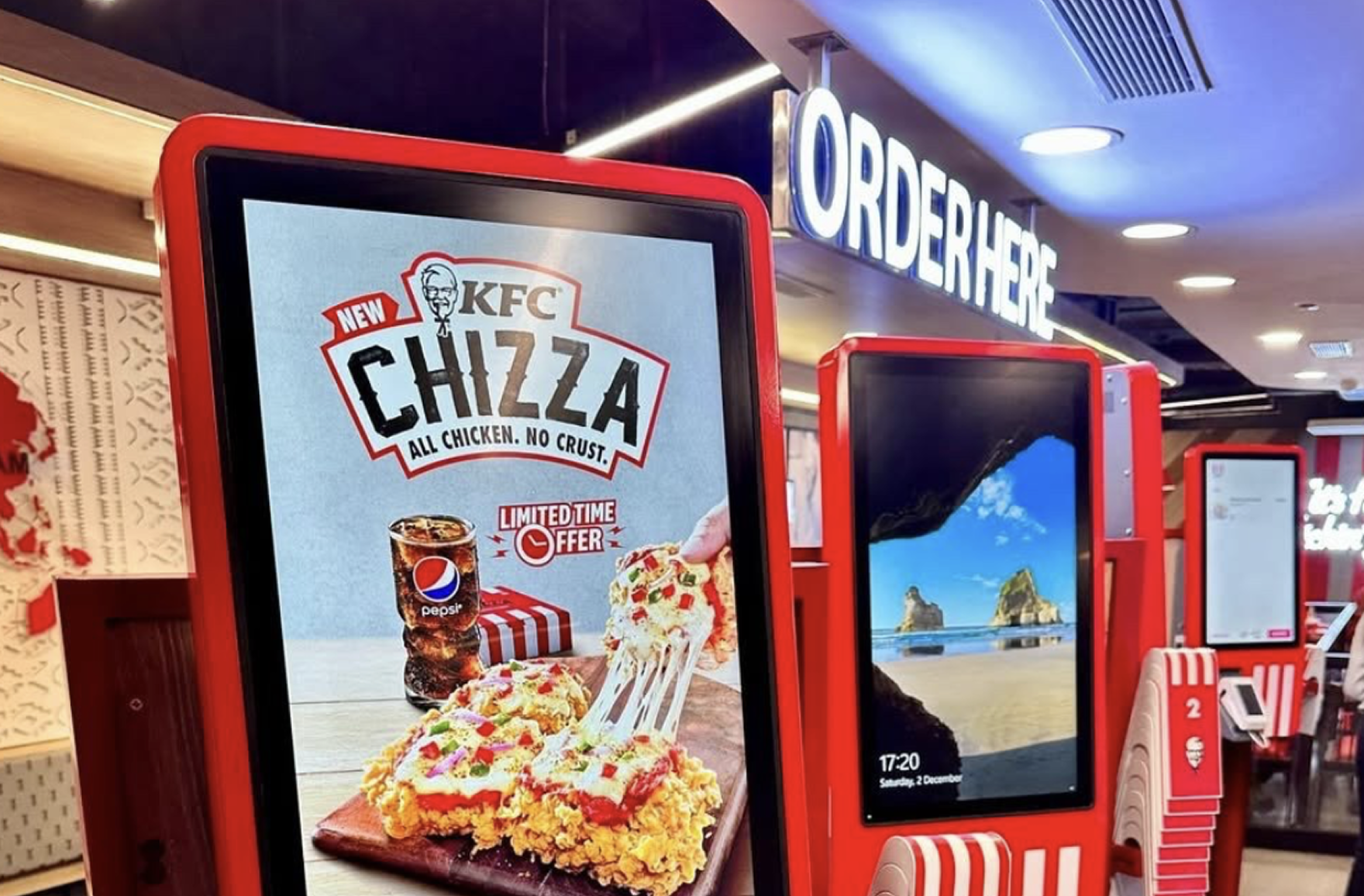
Overview
Re-imagine end-to-end ordering experience with a focus on kiosk as a catalyst to drive measurable top and bottom-line impact.
frog will partner to produce actionable insights on current ordering experience that translates into high impact business interventions.
Complexities
Artificial push for kiosk - Adoption seemed driven by conditions like crowded counters, lock of omni-channel ordering systems, etc.
Unsupported decision making - Kiosk experience breaks down when decision making complexity increase, especially when users need visibility and validation.
Fragmented Experiences - Post purchase experience is fragmented, unclear collection points and minimal guidance.
Lacking accessibility - Most kiosks were tall, fixed at a height, and had content in English alone. This was difficult for children, specially abled, and for people who couldn't speak english.
Impact of the Framework
Due to the tight timeline, the team efficiently leveraged the ‘Intent Cards’ for market research and on-field observation mapping. The cards simplified the process of identifying, understanding, and mapping industry challenges, making it accessible even for junior designers.
They also helped the team break down client requirements, structure the brief, and define the necessary activities and timelines. As a result, the entire proposal was completed within ~3-4 days, including on-field research.
Eg 2- Stryker Proposal
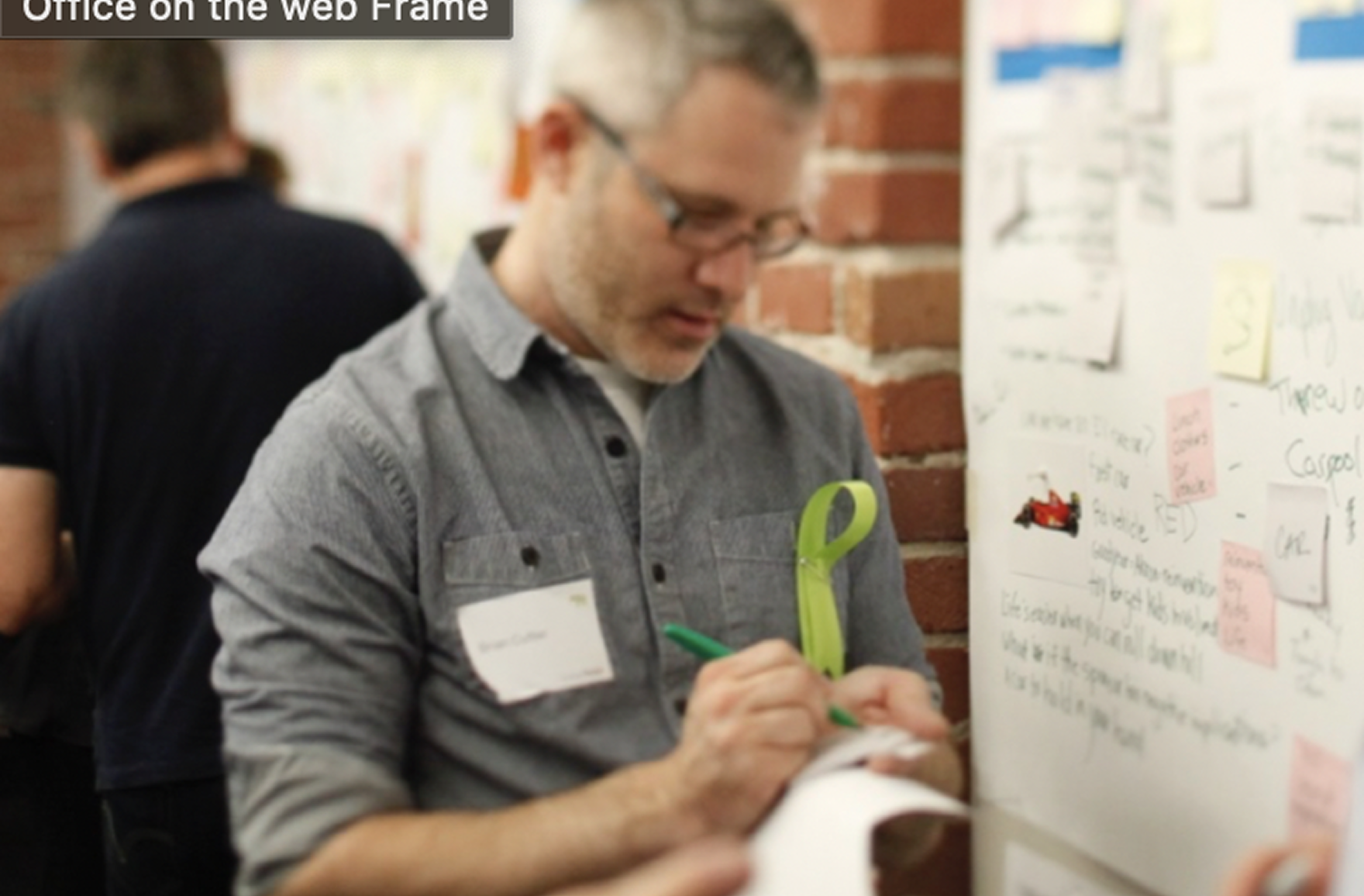
Overview
Stryker aims to develop a QBL solution that helps reduce blood loss during childbirth for pregnant women.
The aim is to define a market-fit solution that integrates seamlessly into existing workflows, delivers clear clinical and economic value, and drives consistent adoption and usage.
Complexities
India sees millions of deliveries each year, with a significant burden of preventable maternal complications.
The quantities reach to 3million deliveries affected by PPH, and 47% maternal deaths attributed to PPH.
Care taking for delivery remains driven by habit, with inconsistent & risky approaches to blood loss estimation.
Current standard of care is visual estimation of blood loss, which is subjective, inconsistent and clinically dangerous.
Impact of the Framework
The team was able to decode the brief, deeply understand the stakeholders’ core challenges, and translate them into actionable opportunities using the Intent Framework.
Beyond the original ask, this critical understanding enabled the team to propose an additional scope of service design work aimed at accelerating the adoption of QBLs in Indian hospitals. This expanded the project scope and increased the overall project value by ~₹20–25 lakhs.
More of my Work…

Barclays Bank CRM Optimisation
Modernizing Investment Bank CRM to enhance Customer Connectivity
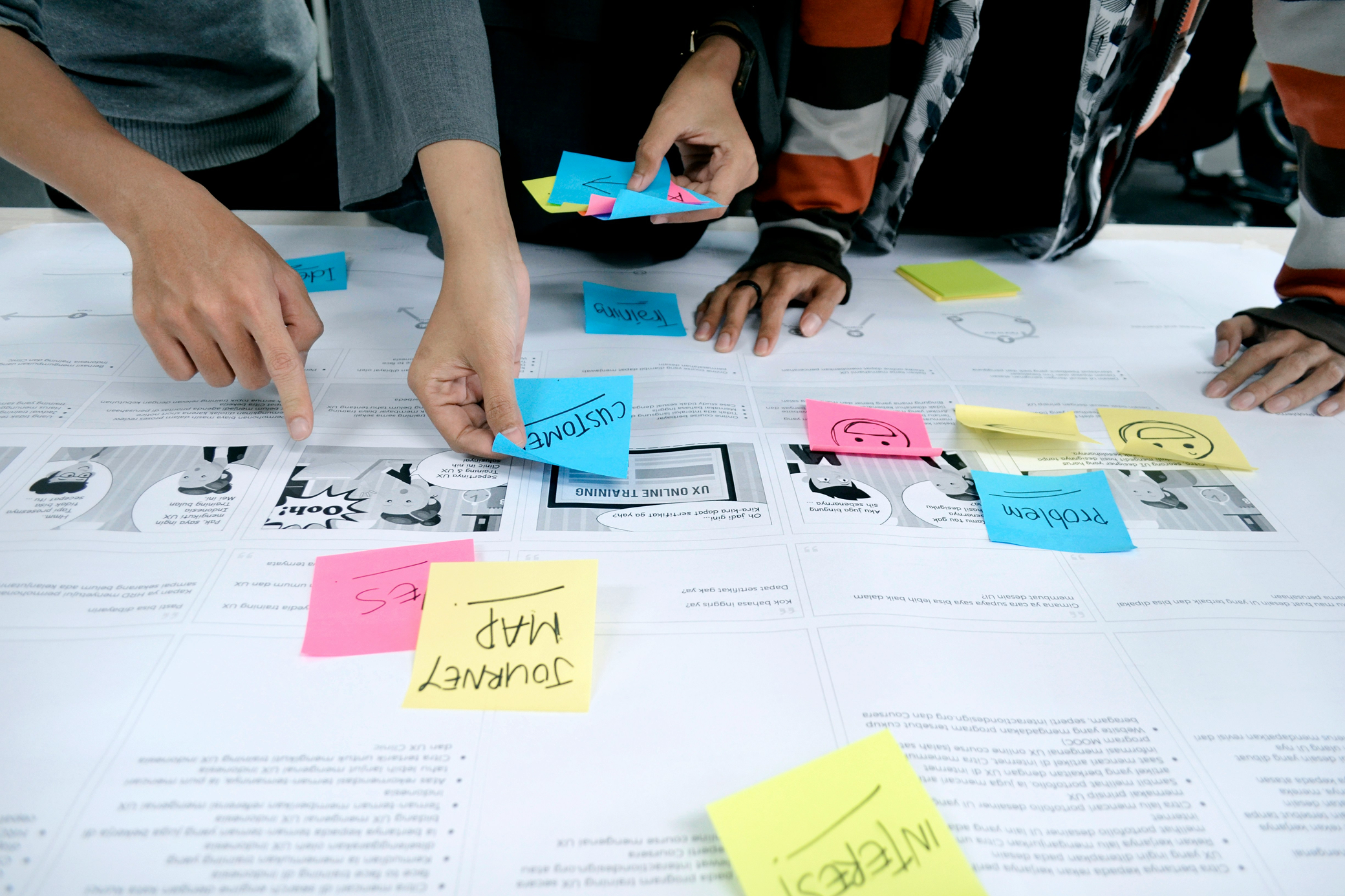
Researching SMB Workflows in India
Investigating Indian SMBs to identify critical business use cases needing digital interventions.